
Insights
IRS Form 5498: A Key Piece of IRA Tax Reporting
Apr 30, 2025 | Read time: 4 minutes
Insights
Apr 30, 2025 | Read time: 4 minutes


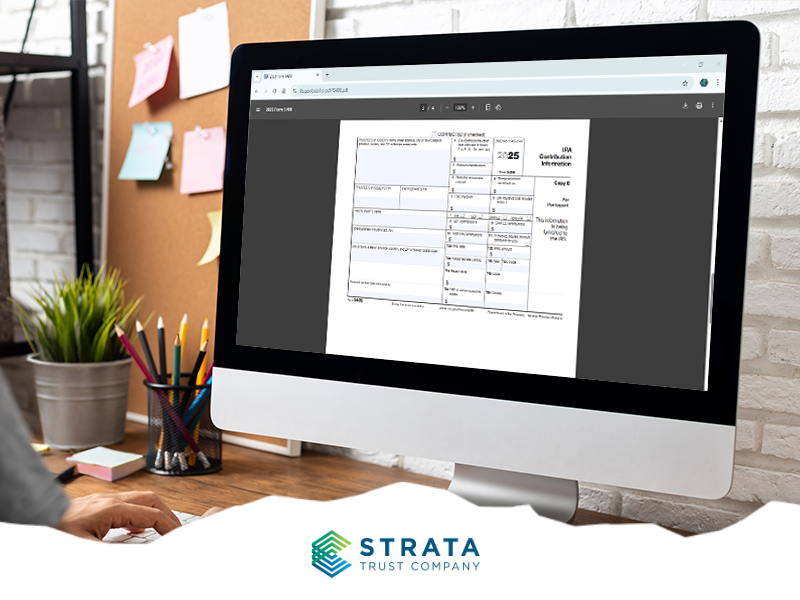
If you own an Individual Retirement Account (IRA), you can expect to receive IRS Form 5498 each year—typically by the end of May. This form, issued by your IRA custodian, serves as an informational report to both you and the IRS about your IRA activity for the previous tax year. It includes details such as contributions, rollovers, Roth conversions, required minimum distributions (RMDs), and the fair market value of your account.
While you don’t need to file Form 5498 with your tax return, it’s important to review it carefully. This ensures the information matches your records, especially since the IRS will use it to confirm the accuracy of your reported IRA activity.
Form 5498 may include:
This broad reporting gives you and the IRS a full snapshot of your IRA’s activity for the tax year.
You might wonder why Form 5498 arrives after the April tax deadline. The reason is simple: many IRA owners make prior-year contributions up until the tax filing deadline (typically April 15). The IRS gives custodians until May 31 to capture these late contributions and report them accurately. This timing ensures that all eligible activity is included and properly reflected.
The good news? You don’t need to file this form with your tax return. Just review it for accuracy, and if something doesn’t look right, contact your custodian to request a correction.
Some custodians send a preliminary Form 5498—or a substitute document—by January 31 to provide information about your IRA’s fair market value or to notify you of an RMD. If a final contribution is made after that date (but before the April deadline), you’ll receive a complete version of Form 5498 in May. If no changes were made, a second form may not be issued unless corrections are needed.
Here are some common scenarios and what to look for:
✅ IRA Contributions
Make sure your annual contributions (for 2024 or early 2025, if for the 2024 tax year) are listed correctly—especially if you’re claiming a deduction for a Traditional IRA.
🔄 Rollovers and Transfers
If you rolled over funds from an employer plan or another IRA, verify that the amount appears under rollovers. This helps ensure that the IRS doesn’t mistakenly treat the transaction as taxable.
➡ Note: Direct transfers between IRAs are not reported and should not appear.
🔁 Conversions and Recharacterizations
Conversions from a Traditional or SIMPLE IRA to a Roth IRA will show up here and often have taxable implications. Recharacterizations (changing a contribution from one IRA type to another) must be done by your tax filing deadline, plus extensions, and will also be reflected on this form.
Example: You took an IRA distribution in 2024 but rolled it over into the same IRA within 60 days. The distribution is reported on IRS Form 1099-R, and the rollover contribution is reported on Form 5498. You must also account for this distribution on your Form 1040, showing the distribution as not taxable and writing “Rollover” by the line that indicates any taxable amount (as indicated in the 1040 instructions).
If your employer made contributions to a SEP or SIMPLE IRA, these will also be reported on Form 5498—even if the contribution applies to the previous year. Be sure these are listed accurately, especially if you’re self-employed or managing your business retirement plan.
The form may also include details about alternative assets held in self-directed IRAs. If these appear and you’re unsure how to interpret them, it’s wise to consult a tax or financial advisor.
While Form 5498 doesn’t require action from you at tax time, it’s still a vital part of your retirement recordkeeping. A quick review can help you catch potential issues early and give you peace of mind knowing your IRA details are reported accurately to the IRS.
If you have any questions, our knowledgeable IRA team is here to help. STRATA also offers a helpful FAQ section on IRS reporting, including insights specifically about Form 5498, to guide you every step of the way.
 Back to all